Quickly find chemical information
Search Examples
Click examples for quick search:
Advanced Search
Welcome to DICL
What is DICL?
The most comprehensive ion channels database
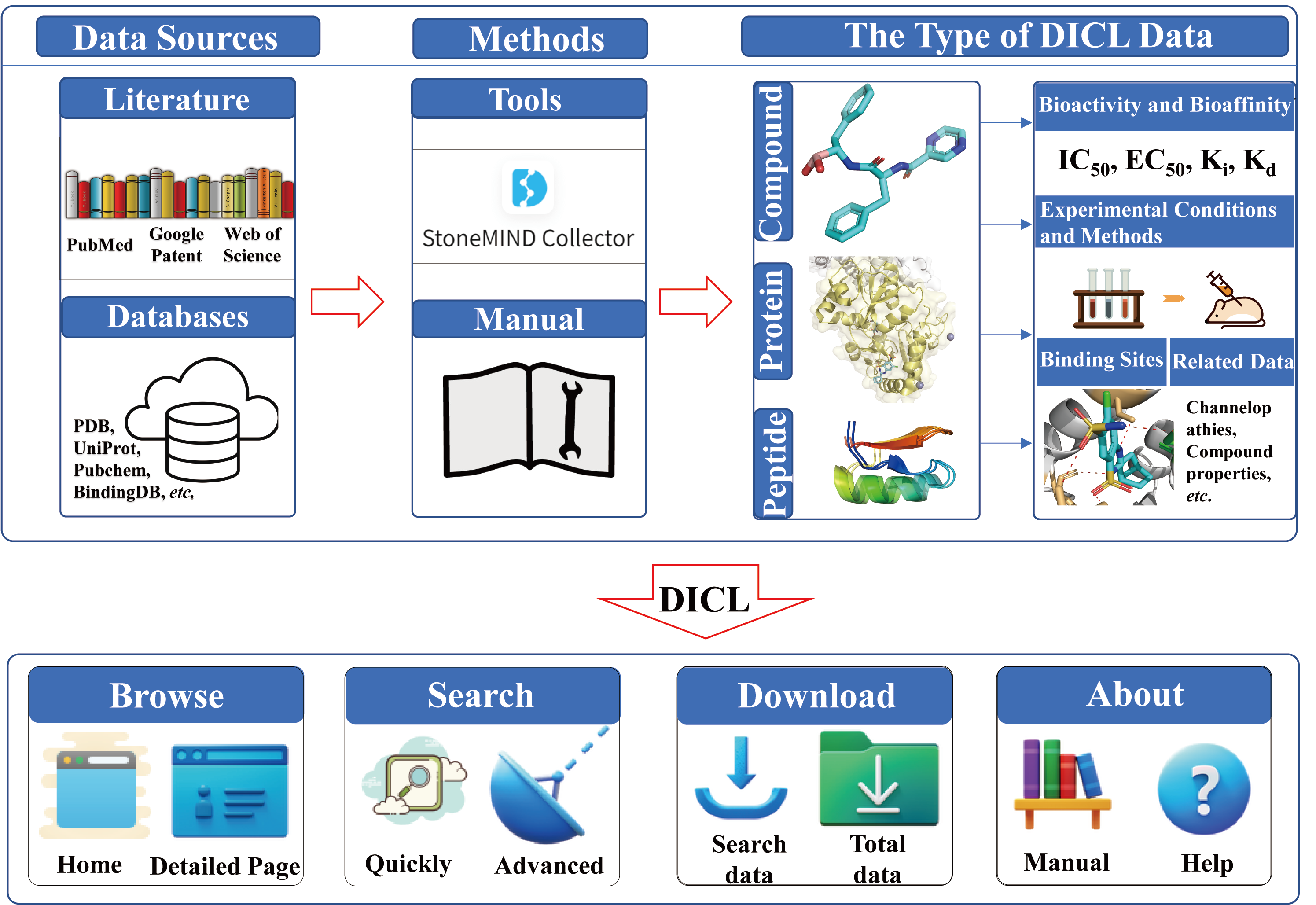
DICL Database Overview
Comprehensive interface for ion channel research data
The Database of Ion Channels and Ligands (DICL) represents the most extensive professional online resource dedicated to ion channels research.
Regularly Updated
Continuously curated with latest research data
Advanced Search
Search by IUPAC, structure, patents, literature
Comprehensive Data
34 data items per record including IC50, EC50, Ki, Kd
Global Coverage
1,750 ion channels from 165 different species
Each data record comprises 34 distinct items including chemical structure, biological activity, target information, and chemical/physical properties, facilitating advancements in scientific research.
Classification of Ion Channel Targets
Understanding the structural and functional diversity of ion channels
Voltage-Gated Ion Channels (VGICs)
Respond to changes in membrane potential
Ligand-Gated Ion Channels (LGICs)
Activated by neurotransmitter binding
Other Ion Channels (OICs)
Specialized channels with unique properties
Overview of Ion Channels
Ion channels are ion-permeable pores located in the lipid membranes of all cells. They open and close in response to various stimuli, regulating the flow of specific small ions.
- Establish resting membrane potentials of all cells
- Facilitate electrolyte movements for volume regulation
- Act as detectors of stimuli (electrical or chemical)
Typically composed of oligomeric complexes with 3-5 homologous subunits arranged in circular symmetry.
Exceptions include ClC chloride channels (2 subunits, each forming one pore).
Classification: Ion channels are generally classified into voltage-gated, ligand-gated, and other ion channels.
Key Statistics
Phylogenetic Tree Analysis
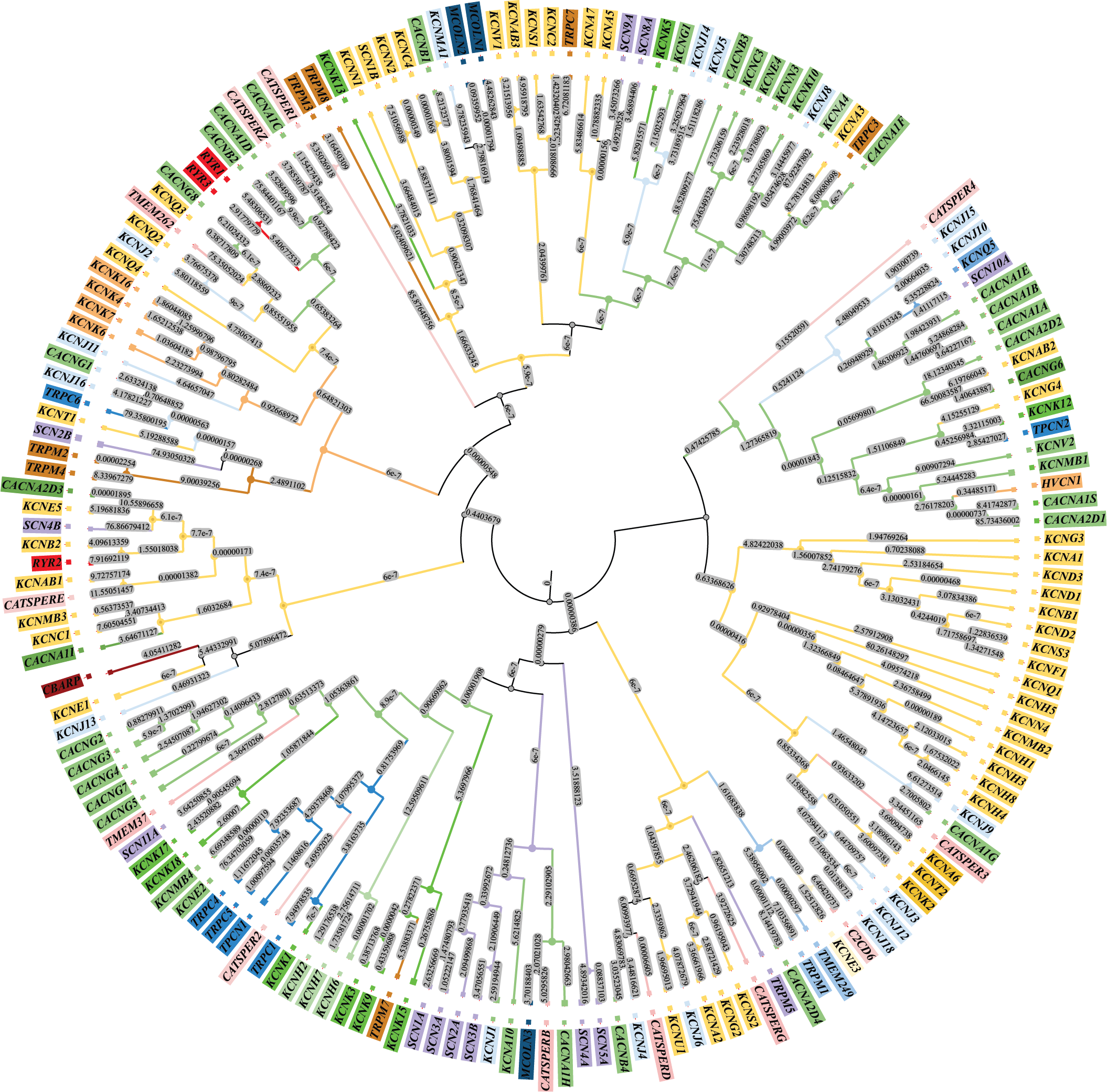
Voltage-Gated Ion Channels Superfamily
The largest superfamily of ion channels consists of tetrameric voltage-gated cation channels and their relatives.
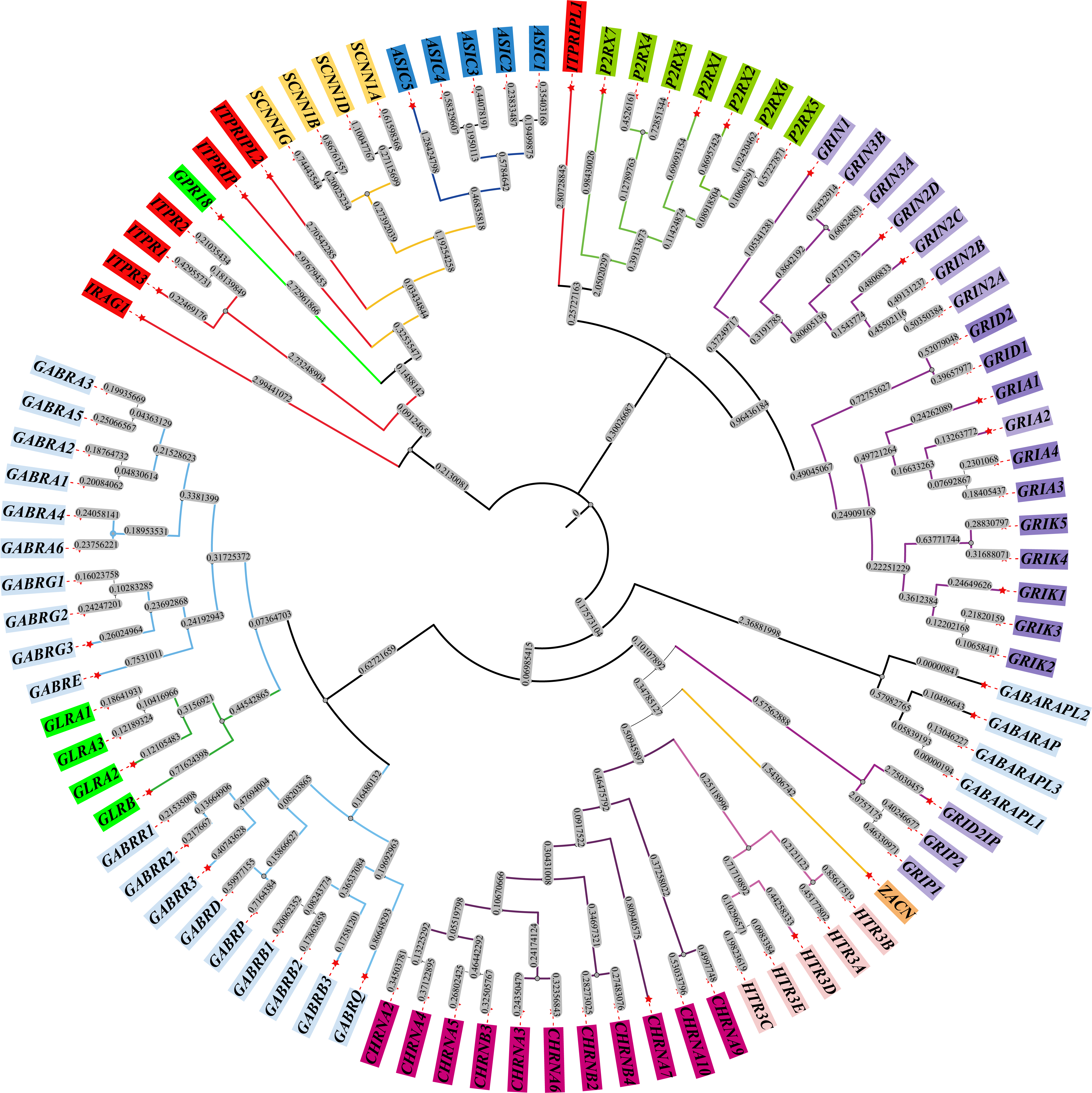
Ligand-Gated Ion Channels Families
Several families gated by extracellular ligands, including fast synaptic receptors.
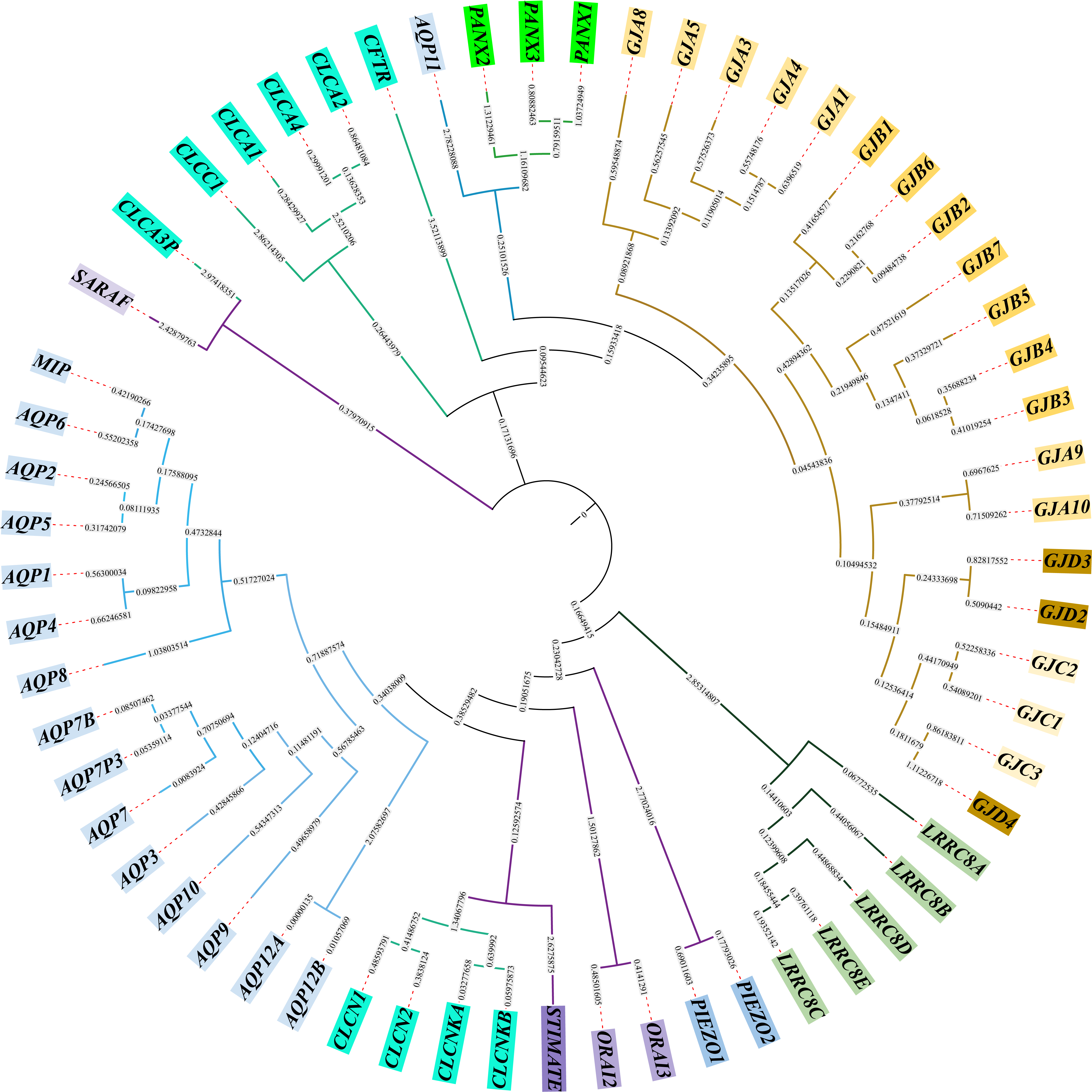
Other Ion Channel Families
Channels with completely different structural properties that evolved separately.
Voltage-Gated Ion Channels (VGICs)
VGICs are one of the largest superfamilies of signal transduction proteins, selectively permeating ions across the cell membrane in response to changes in membrane potential.
Major VGIC Families:
Structural Characteristics:
- Four-fold symmetry around central axis
- Domain-swapped architecture
- Each repeat contains 6 transmembrane segments
- VSD (S1-S4) and pore domain (S5-S6)
Clinical Relevance
- Associated with neurological disorders
- Target for cardiovascular diseases
- ~10% of FDA-approved drugs target VGICs
- Essential for muscle contraction
Ligand-Gated Ion Channels (LGICs)
LGICs mediate fast synaptic transmission on a millisecond time scale, with ion flux driven by electrochemical gradients.
LGIC Families:
Cation-Selective (Excitatory)
Anion-Selective (Inhibitory)
Structural Features:
- Pentameric (Cys-loop receptors) or tetrameric structures
- Large extracellular ligand-binding domains
- Fast gating (millisecond scale)
- Multiple subunit genes enabling heteromultimers
Functional Roles
- Fast synaptic transmission
- Phasic and tonic neuronal regulation
- Neuromuscular junction function
- Sensory signal processing
Other Ion Channels
Channels that do not fit neatly into voltage-gated or ligand-gated classifications, featuring unique structural and functional properties.
Water Channels
Aquaporins for regulated water transport
Chloride Channels
ClC family with unique architecture
Gap Junctions
Connexins for intercellular communication
Included Families:
Specialized Functions
- Volume regulation
- Osmotic balance
- Intercellular signaling
- Mechanosensation